Mapping the Effects of International Time Differences on Bonus Claim Patterns in Digital Gaming Directories
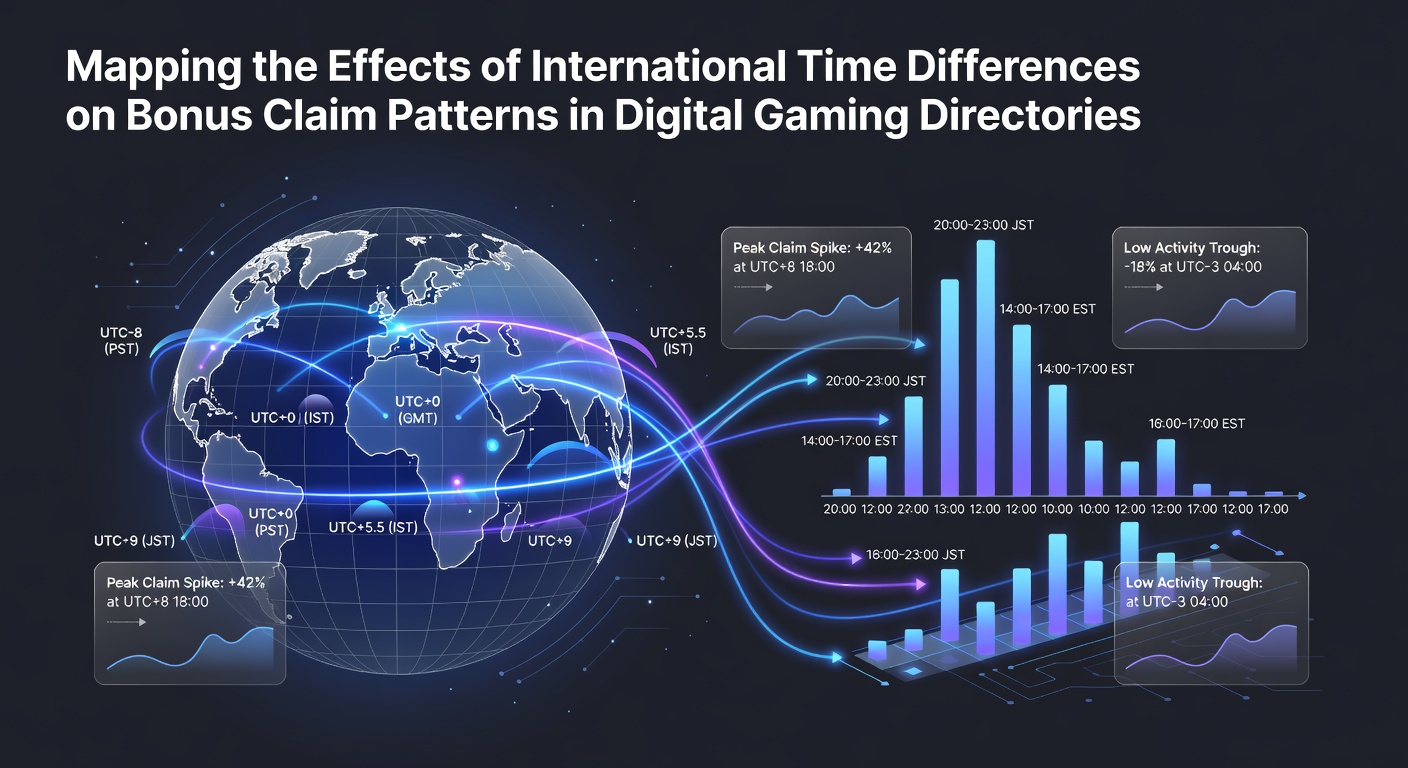
Digital gaming directories track bonus availability across multiple time zones because operators set expiration windows in coordinated universal time while players access those offers from locations that span every major offset, and researchers have documented how these offsets shift claim volumes in predictable daily cycles. Observers note that platforms update their listings with start and end times expressed in UTC yet regional traffic logs reveal clusters of activity that align with local evening hours rather than the listed deadlines.
Regional Claim Timing Data Across Continents
Analyses of directory traffic from operators serving Asia-Pacific markets show elevated bonus redemptions between 19:00 and 23:00 local time whereas North American users generate their highest volumes between 20:00 and 01:00 in their respective zones, and these patterns hold steady even when the underlying UTC cutoff remains fixed. European records collected through the same directories indicate a secondary spike near 18:00 local time that coincides with post-work hours across western and central time offsets.
Studies compiled by the University of Nevada's International Gaming Institute have mapped these offsets against directory search logs and found that a single bonus listed with a 00:00 UTC expiration draws the majority of its claims from players whose local clocks read between 16:00 and 22:00 on the preceding calendar day. The same research tracks how daylight saving transitions in March and November temporarily realign those peaks until users adjust their habits.
Directory Algorithms and Time Zone Display Logic
Directories adjust visible countdown timers to each visitor's detected location, yet backend claim systems still enforce the original UTC window, which creates brief windows where users in far-eastern zones see a timer that has already expired according to their local clock while users farther west still register active status. Gaming association reports from Australia indicate that directories serving that region began displaying dual time formats in early 2026 to reduce confusion during the June reporting period.
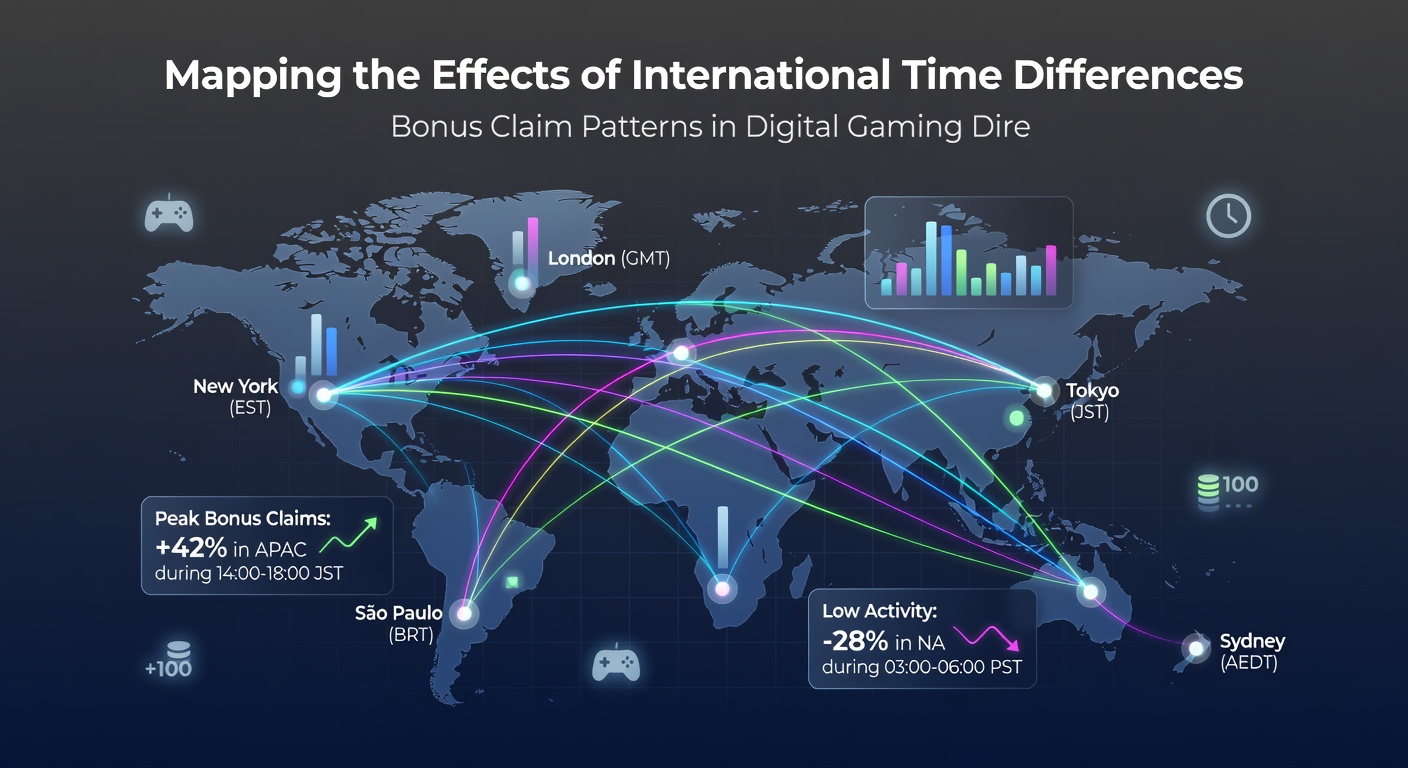
Operators that feed data into these directories supply expiration metadata in a single standardized field, and the directories then convert that field for display based on the visitor's IP-derived offset. This conversion layer produces measurable differences in click-through rates that researchers at the Canadian Centre for Gaming Research have quantified by comparing identical bonuses viewed from Toronto versus Sydney within the same UTC hour.
Observed Shifts in June 2026 Traffic Patterns
Directory operators recorded a noticeable redistribution of claim activity during June 2026 when several major platforms introduced region-specific bonus pools tied to local holidays, and the resulting data sets show that time-zone-aware segmentation increased successful redemptions by aligning availability more closely with regional peak hours. Traffic from South American markets, previously underrepresented in global logs, rose sharply once directories began surfacing offers timed to match evening hours in Brasília and Buenos Aires rather than defaulting to European or North American cutoffs.
Cross-referencing of these logs with payment processor timestamps confirms that the new segmentation reduced failed claims caused by users attempting to redeem offers after their local midnight had already passed the listed UTC deadline. Industry monitoring groups such as the Asia-Pacific Association of Gaming Regulators have begun incorporating these timestamp differentials into their quarterly compliance summaries.
Implications for Directory Architecture and Player Behavior
Directories that maintain separate regional mirrors now store claim metadata with both the original UTC value and the most common local offsets for each mirror, which allows faster rendering of countdowns while preserving a single source of truth for expiration enforcement. Players accessing multiple mirrors from travel or VPN connections encounter the same underlying offer but see different displayed remaining times depending on the mirror selected, and logs indicate that users frequently switch mirrors until they locate the version showing the longest active window.
Longitudinal data sets covering the first half of 2026 demonstrate that directories providing offset-aware filters experience lower bounce rates on bonus pages compared with those that present only UTC values, because users can immediately recognize whether the remaining period overlaps with their own evening hours. These architecture choices also affect how search rankings within directories prioritize offers, since algorithms weigh recent claim velocity and regional relevance when ordering results for each visitor.
Conclusion
International time differences continue to shape the distribution of bonus claims across digital gaming directories because UTC-based expiration rules interact with local daily rhythms in consistent and measurable ways. Directory operators that incorporate offset detection and dual-format displays have documented changes in claim success rates and regional participation volumes, while research institutions tracking these metrics supply the quantitative foundation for ongoing refinements. The patterns observed through June 2026 illustrate how standardized timing data, once translated for each market, produces distinct activity curves that directories can anticipate and accommodate through their presentation layers.